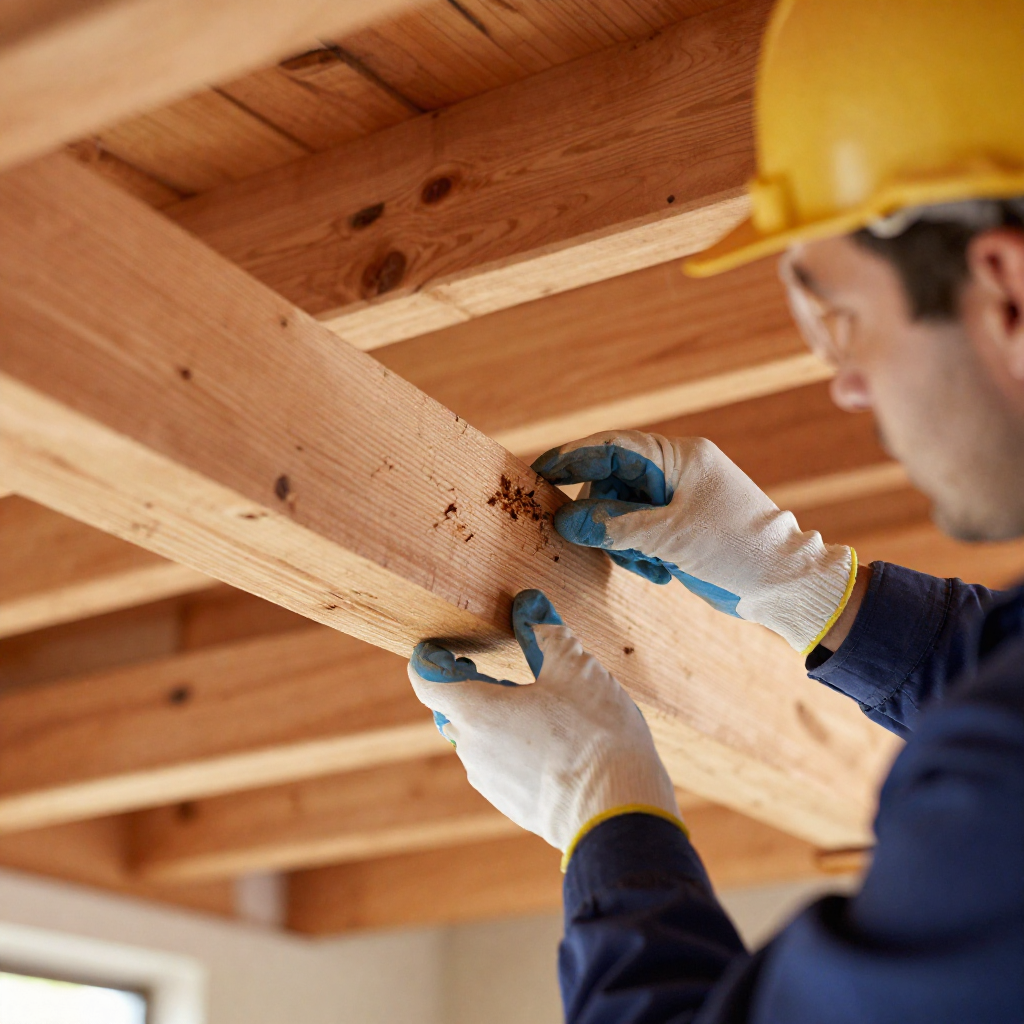
Wood-boring beetles are among the most destructive pests affecting wooden homes, furniture, and historic buildings across Europe. Although they are often referred to collectively as woodworm, the term actually describes the larval stage of several different beetle species. Each species has unique characteristics, preferred wood types, and levels of damage, making proper identification essential for choosing the right treatment.
From antique furniture in centuries-old cottages to structural roof beams in modern homes, wood-boring beetles can silently weaken timber for years before their presence becomes obvious. Because the larvae remain hidden inside the wood for much of their life cycle, infestations often go unnoticed until small exit holes, powdery frass, or weakened timber appear.
In this guide, we’ll explore the most common wood-boring beetles found in European homes, explain how to identify them, and share practical tips for prevention and treatment.
What Are Wood-Boring Beetles?
Wood-boring beetles are insects whose larvae feed on timber. Adult beetles lay eggs in cracks, crevices, or old exit holes in wood. Once the eggs hatch, the larvae tunnel through the timber while feeding on cellulose and other nutrients.
The larval stage can last anywhere from two to ten years, depending on the species and environmental conditions. During this period, the larvae create intricate tunnels known as galleries, weakening the wood from the inside. When fully developed, the adult beetles emerge through small round exit holes, leaving behind one of the most recognizable signs of a woodworm infestation.
Why Are European Homes Vulnerable?
Many European homes contain older timber that is particularly attractive to wood-boring beetles. Historic buildings, antique furniture, exposed beams, and traditional wooden flooring provide ideal breeding grounds, especially when combined with high humidity or poor ventilation.
Factors that increase the risk of infestation include:
- Older untreated timber
- Damp conditions
- Poor ventilation
- Roof or plumbing leaks
- Antique furniture
- Wooden outbuildings and barns
Regular inspections are especially important in properties with original timber features.
1. Common Furniture Beetle (Anobium punctatum)
The Common Furniture Beetle is the most widespread wood-boring beetle in Europe and is responsible for the majority of woodworm infestations found in homes.
Appearance
Adult beetles are:
- Brown in color
- Oval-shaped
- Approximately 2–5 mm long
Preferred Timber
This species mainly attacks:
- Softwood furniture
- Floorboards
- Roof timbers
- Joists
- Wooden beams
Signs of Infestation
Look for:
- Small round exit holes (1–2 mm)
- Fine, powdery frass
- Weak or crumbly timber
- Adult beetles emerging in spring and summer
Although the exit holes are small, the larvae may spend up to five years feeding inside the wood before emerging.
2. Deathwatch Beetle (Xestobium rufovillosum)
The Deathwatch Beetle is well known for infesting older buildings and historic properties across Europe.
Its name comes from the distinctive tapping sound produced by adult beetles during mating season, which was once associated with old folklore.
Appearance
Adult beetles are:
- Dark brown
- Approximately 5–9 mm long
- Covered with fine hairs
Preferred Timber
This species prefers:
- Hardwood
- Oak beams
- Historic timber structures
- Damp wood affected by fungal decay
Signs of Infestation
Common indicators include:
- Larger exit holes (2–3 mm)
- Coarse frass
- Hollow timber
- Audible tapping sounds during quiet evenings
Because this beetle often attacks structural beams, professional treatment is usually recommended.
3. House Longhorn Beetle (Hylotrupes bajulus)
The House Longhorn Beetle is one of the most destructive wood-boring beetles in Europe.
Although less widespread than the Common Furniture Beetle, it can cause severe structural damage.
Appearance
Adult beetles are:
- Black or dark brown
- Between 8–25 mm long
- Characterized by long antennae
Preferred Timber
This beetle mainly attacks:
- Softwood roof timbers
- Pine
- Spruce
- Fir
Signs of Infestation
Typical signs include:
- Large oval exit holes (6–10 mm)
- Coarse, fibrous frass
- Extensive internal tunneling
- Weak roof structures
Because of the extensive damage this species can cause, immediate professional assessment is essential.
4. Powderpost Beetles (Lyctus species)
Powderpost Beetles are common in hardwood furniture and decorative timber.
Unlike some other species, they prefer wood with a high starch content.
Appearance
Adult beetles are:
- Slender
- Reddish-brown
- Around 3–7 mm long
Preferred Timber
They commonly infest:
- Oak
- Ash
- Walnut
- Bamboo
- Hardwood flooring
Signs of Infestation
Indicators include:
- Very fine, flour-like frass
- Small round exit holes
- Damage concentrated in hardwood furniture
- Repeated infestations in untreated wood
Fresh hardwood products can occasionally become infested if not properly treated.
5. Wood-Boring Weevils (Euophryum species)
Although technically weevils rather than beetles, these insects are often included in discussions about woodworm because they produce similar damage.
Preferred Conditions
Wood-boring weevils thrive in:
- Damp timber
- Decaying wood
- Poorly ventilated buildings
Common Locations
They are frequently found in:
- Basements
- Cellars
- Window frames
- Damp floorboards
Eliminating moisture problems is one of the most effective ways to control these pests.
How to Identify a Wood-Boring Beetle Infestation
Regardless of the species, several warning signs are common.
Exit Holes
Small round or oval holes appear when adult beetles emerge from the timber.
Hole size varies depending on the species.
Frass
Wood-boring larvae produce frass, a powder-like waste material that collects beneath infested wood.
The texture ranges from fine powder to coarse pellets depending on the beetle species.
Weak Timber
Internal tunneling gradually weakens wooden structures.
Signs include:
- Soft wood
- Loose furniture joints
- Crumbling timber
- Hollow sounds when tapped
Adult Beetles
Finding live beetles during spring or summer often indicates an active infestation.
Which Areas of the Home Are Most at Risk?
Wood-boring beetles commonly attack:
- Roof spaces
- Loft beams
- Floorboards
- Staircases
- Wooden doors
- Window frames
- Antique furniture
- Cabinets
- Barns and sheds
- Wooden outbuildings
Regular inspections of these areas can help detect problems before serious damage occurs.
Preventing Wood-Boring Beetle Infestations
Preventive maintenance is the best defense against woodworm.
Follow these recommendations:
- Keep timber dry and well ventilated.
- Repair roof and plumbing leaks promptly.
- Reduce indoor humidity.
- Inspect antique furniture regularly.
- Treat exposed timber with suitable wood preservatives.
- Avoid storing valuable wooden items in damp environments.
- Schedule periodic professional timber inspections, especially in older homes.
Proper moisture control significantly reduces the likelihood of infestation.
When Should You Call a Professional?
Professional help is recommended if:
- Structural beams are affected.
- Fresh exit holes continue appearing.
- Large amounts of frass are present.
- Multiple rooms show signs of infestation.
- Timber feels soft or unstable.
- You’re unable to identify the beetle species.
Accurate identification is essential because treatment methods vary depending on the type of wood-boring beetle.
Conclusion
European homes are vulnerable to several species of wood-boring beetles, each with its own habits, preferred timber, and level of damage. The Common Furniture Beetle remains the most widespread, while the Deathwatch Beetle, House Longhorn Beetle, Powderpost Beetle, and Wood-Boring Weevil also pose significant risks under the right conditions.
Learning to recognize the warning signs—such as exit holes, frass, weakened timber, and adult beetles—can help homeowners detect infestations early. Combined with regular inspections, proper moisture control, and timely professional treatment, early identification is the best way to protect your home, furniture, and valuable wooden structures from long-term damage.